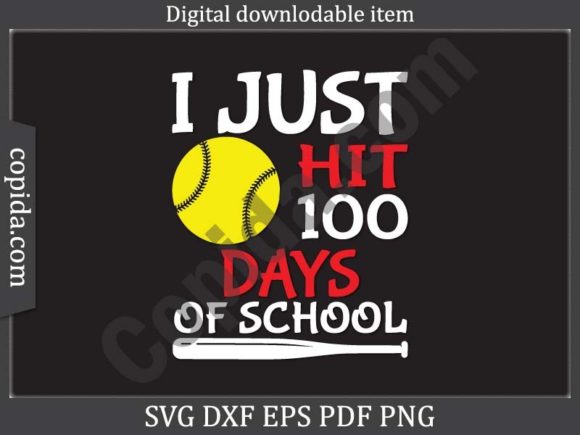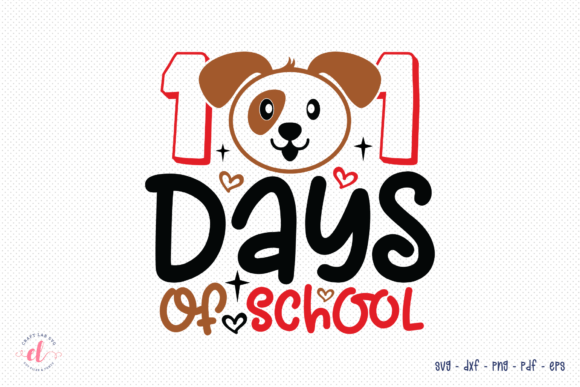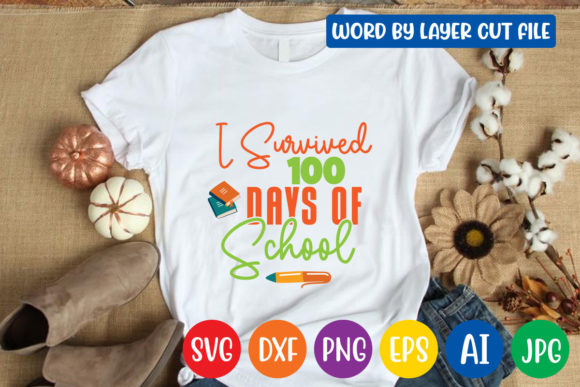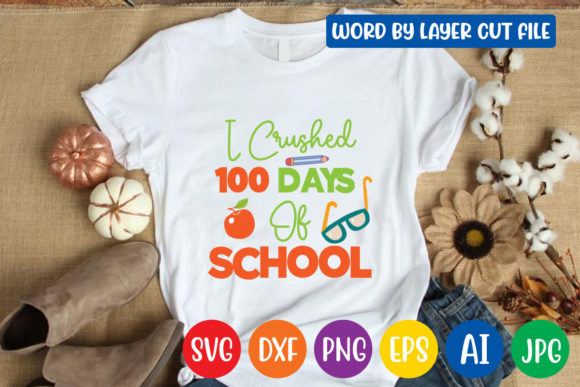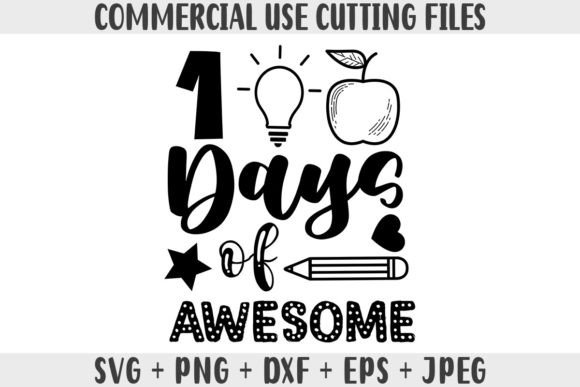
Reviewing the 100 Days of Awesome School SVG for Stitchers
As a designer who spends more time looking at stitch paths than most people spend sleeping, I approach every new digital embroidery file with a mix of curiosity and skepticism. We have all been there: you download a cute graphic, load it into your software, and realize halfway through the simulation that the density is going to turn your fabric into cardboard. That is why when I pulled up the 100 Days of Awesome School SVG, my first move was not to hoop it up immediately, but to analyze its potential as a functional machine embroidery design.
This particular asset sits in an interesting space. It is marketed broadly across Crafts and Graphics, intended for everything from coffee mugs to t-shirts. But for us embroidery professionals, the question is always about translation. How does a vector-based concept hold up when converted into thread? After reviewing the layout and considering its application on various textiles, here is my practical take on using this design for real-world projects.
First Impressions and Visual Personality
The immediate vibe of the 100 Days of Awesome School SVG is celebratory and youthful. It captures that specific milestone energy that parents and teachers love. Visually, the lines are clean, which is a good starting point. In embroidery, overly complex gradients or tiny, intricate details often get lost in the stitching process. This design appears to have a boldness that should translate well to thread, provided the digitizer has respected the limitations of the medium.
The mood is upbeat, making it a natural fit for personalized gifts and custom apparel. It does not try to be too subtle. For a school milestone, you want visibility. You want the achievement to be readable from across the playground. The visual personality suggests confidence, which is exactly what a child feels after completing one hundred days of learning. As a design asset, it offers a strong foundation for creating memorable keepsakes.
Real-World Application: The Sweatshirt Test
To truly evaluate a design, you have to imagine it on a finished product. I pictured this design centered on the chest of a heather grey youth sweatshirt. This is a classic sweatshirt embroidery scenario. The texture of the fleece provides a stable base, allowing the stitches to sit on top rather than sinking in.
In this context, the 100 Days of Awesome School SVG shines. The contrast between bright thread colors and the muted grey fabric would make the design pop. I envisioned using a combination of fill stitch for the larger shapes to give them body and satin stitch for the borders to create crisp, defined edges. This combination adds dimension, turning a flat graphic into a tactile handmade product that feels premium.
Beyond apparel, I considered its use on a canvas tote bag design. Canvas is dense and holds stitches beautifully. A tote bag featuring this motif would be a hit for carrying library books or art supplies. It transforms a utilitarian item into a badge of honor for the student. For Etsy sellers and small shop product creators, this versatility is key. One design can serve multiple inventory needs, from clothing to accessories.
Navigating Fabric and Hoop Constraints
While the design is versatile, it is not without its challenges. Embroidery is physics as much as it is art. If you are planning to stitch this on a cap or a curved surface, you need to be mindful of distortion. Curved fabrics pull differently than flat ones. I would recommend testing the design on a scrap piece of similar material first. Check how the stitch density affects the drape of the fabric. If the design is too dense, it might cause puckering, especially on thinner materials like a standard cotton t-shirt.
Speaking of thin fabrics, if you are attempting baby embroidery on a onesie, caution is required. Babies have sensitive skin, and heavy stitching can feel scratchy or stiff. In such cases, consider using a softer backing or reducing the density if your software allows. Always use the appropriate stabilizer. For stretchy knits, a cut-away stabilizer is usually safer than tear-away, ensuring the design remains intact after multiple washes.
Another critical factor is hoop size. Before purchasing or downloading, confirm that the design fits within your machine’s maximum hoop area. There is nothing more frustrating than loading a file only to find it exceeds your 5x7 inch limit. Additionally, inspect the small details. If the design includes tiny text or intricate corners, ensure they are large enough to be stitched cleanly. Tiny elements can become blobs of thread if the needle cannot physically navigate the turns.
Commercial Viability and Brand Consistency
For those running a craft business, the commercial viability of a design is paramount. The 100 Days of Awesome School SVG taps into a seasonal market peak. Parents are eager to document these milestones, and teachers look for unique items for their classrooms. By offering this as part of a commercial embroidery lineup, you can attract customers looking for high-quality, durable alternatives to printed vinyl.
However, professionalism matters. Your finished product reflects your brand. If the stitching is messy or the tension is off, it hurts your reputation. Take the time to refine your thread choices. High-quality rayon or polyester threads will enhance the sheen and durability of the design. Consider creating printable mockup images to showcase how the design looks on different items. This helps customers visualize the final result and increases buyer engagement.
It is also worth noting the licensing terms. While the product description mentions usage for print on demand and custom items, always double-check the specific license associated with the digital embroidery file. Ensure you have the right to sell finished physical items. Some licenses restrict digital resale or require attribution. Protecting your business means respecting intellectual property rights.
Practical Designer Notes for Success
To get the best results from this design, keep these practical tips in mind:
- Test on Scrap Fabric: Never stitch a new design directly on your final garment. Run a test piece to check tension and registration.
- Check Thread Contrast: Ensure your thread colors stand out against the fabric. Low contrast can make the design look muddy from a distance.
- Review Stitch Density: If the design feels too stiff, consider adjusting the density settings in your digitizing software, if available.
- Confirm Hoop Size: Verify the dimensions fit your machine before starting the project.
- Inspect Small Details: Zoom in on the preview to ensure no elements are too small to stitch effectively.
- Use Proper Stabilizer: Match the stabilizer to the fabric type. Cut-away for knits, tear-away for wovens.
- Verify Licensing: Confirm you have the correct rights for commercial use if selling finished goods.
In conclusion, the 100 Days of Awesome School SVG is a promising addition to your library of design assets. It offers a blend of fun and functionality that appeals to a wide audience. By approaching it with a designer’s eye—considering fabric, stitch type, and end-use—you can create stunning embroidered patch styles, apparel, and home decor items that customers will cherish. It is not just about putting thread on fabric; it is about creating a tangible memory. With careful execution, this design can be a standout performer in your embroidery project portfolio.